

DLB Creative
MarketingA brand audit system, rebuilt so its founder can shape it himself.
How we rebuilt Enid, Doug Belding’s brand audit system, so he can change it himself as his method changes, and his time goes to the walkthrough clients value most.
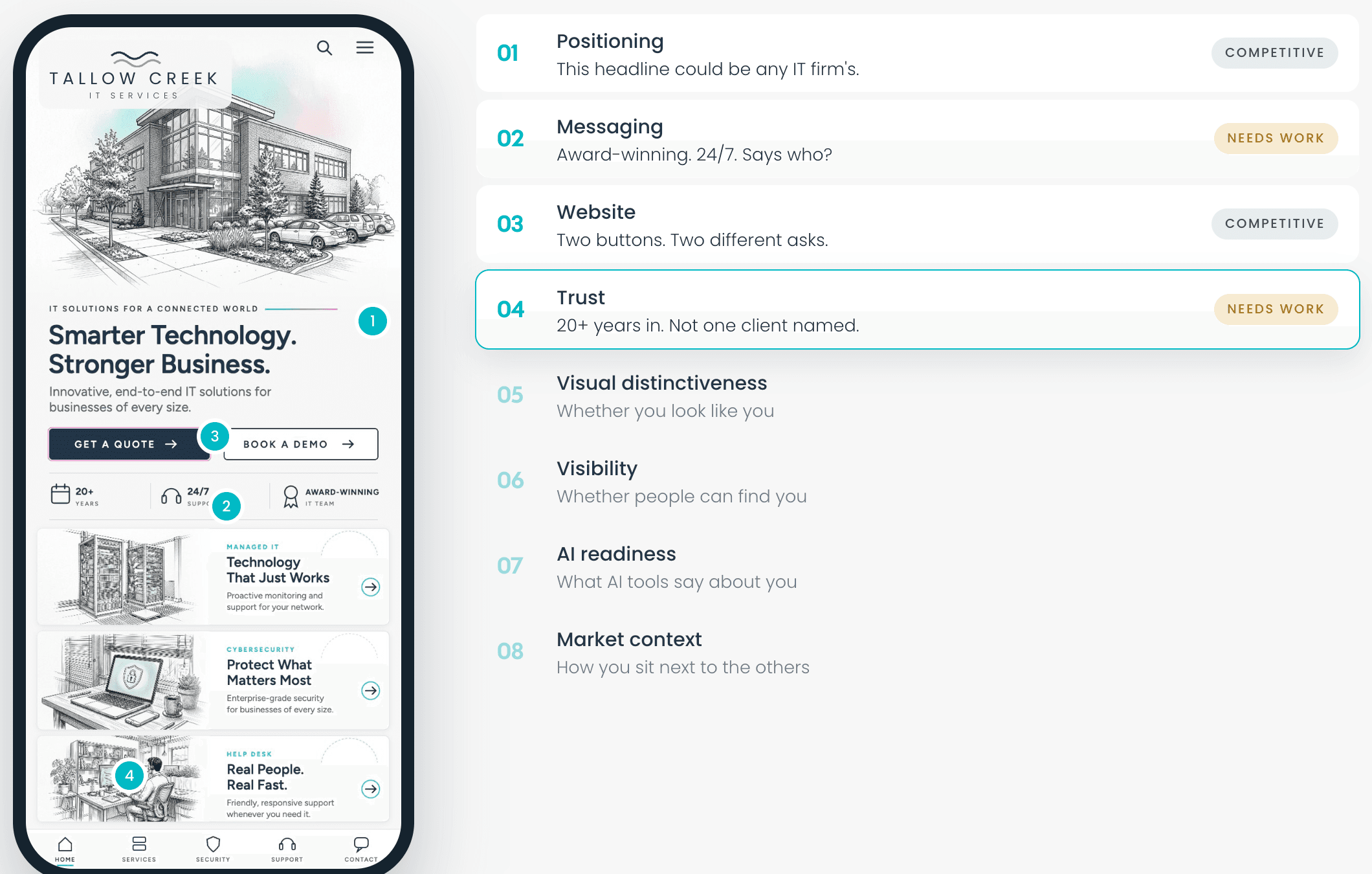
- 01PositioningThis headline could be any IT firm’s.Competitive
- 02MessagingAward-winning. 24/7. Says who?Needs work
- 03WebsiteTwo buttons. Two different asks.Competitive
- 04Trust20+ years in. Not one client named.Needs work
10 hours
back on every audit
24
signals across eight areas
About the client
Doug Belding runs DLB Creative, a one-person brand consultancy in Nashville, and has worked in brand since 2010. His brand audits show owners, advisors, and investors how a company shows up from the outside, often two or three years before a sale or raise. They run on Enid, his brand intelligence system, which has read 40+ companies since March 2025.
The problem
For years, every audit meant Doug going through a company’s website, social media, and LinkedIn by hand, line by line, before he could get to the part only he can do. Enid took on the reading, but Doug needed a version he could get into and shape himself as his method changes.
The solution
We rebuilt Enid around Doug’s method. It reads how the company’s brand shows up across its website, social media, and LinkedIn, and scores it on Doug’s 24 signals, from positioning and messaging to trust and AI readiness. Doug goes through every finding, adds what only he would catch, and decides what the client hears first. When his method changes, he updates the system himself.
The impact
Enid gives Doug back about 10 hours on every audit, and that time went back into the work: more reads, a lower starting price for the same depth, and more time in the walkthrough, the part clients value most. Every report still carries his judgment.
I’d been doing this by hand for years, and it ate my week. Alex built me something that worked from day one, and I can shape it myself as my method changes. Enid reads. I decide.
“I shared it with our marketing committee and we’re going to make some of the adjustments Enid recommended.”
How it’s built
Context
Doug’s criteria and point of view as 24 signals across eight areas: positioning, messaging, website, trust, visual distinctiveness, visibility, AI readiness, and market context.
Process
His audit method as repeatable steps: read how the brand shows up, score each area from At Risk to Leading, flag what to fix first, and write a client-ready report.
Tools
Everywhere the brand shows up: the company’s website, social media, and LinkedIn. It runs on Claude, Firecrawl, and a few Python packages.
Structure
Every audit organized and every finding tracked, so each one builds on the last. Doug can update the signals and steps himself as his method changes.
Step by step
A new company to audit
Enid reads how the brand shows up across the website, social media, and LinkedIn
It scores the brand on Doug’s 24 signals, from positioning and messaging to trust and AI readiness
A person decides: Doug goes through every finding, adds what only he would catch, and decides what the client hears first
A client-ready report carrying Doug’s judgment: what’s working, what to fix first, and a 30, 60, and 90 day plan
When his method changes, Doug updates the system himself